The down payment has a percentage attached to it, so people plan for it. Everything else arrives without a percentage, usually in the last six weeks, usually as an email with a figure and a due date. This is the list of those things. Not so you can dread them, but so you can put each one into your goal now, while there's still time to save for it.
Nothing here has a default number. Costs vary by state, by home and by who you work with, and any figure we made up would be a guess wearing a suit. What you'll find instead is what to ask about, and a line to write down.
What comes due at signing?
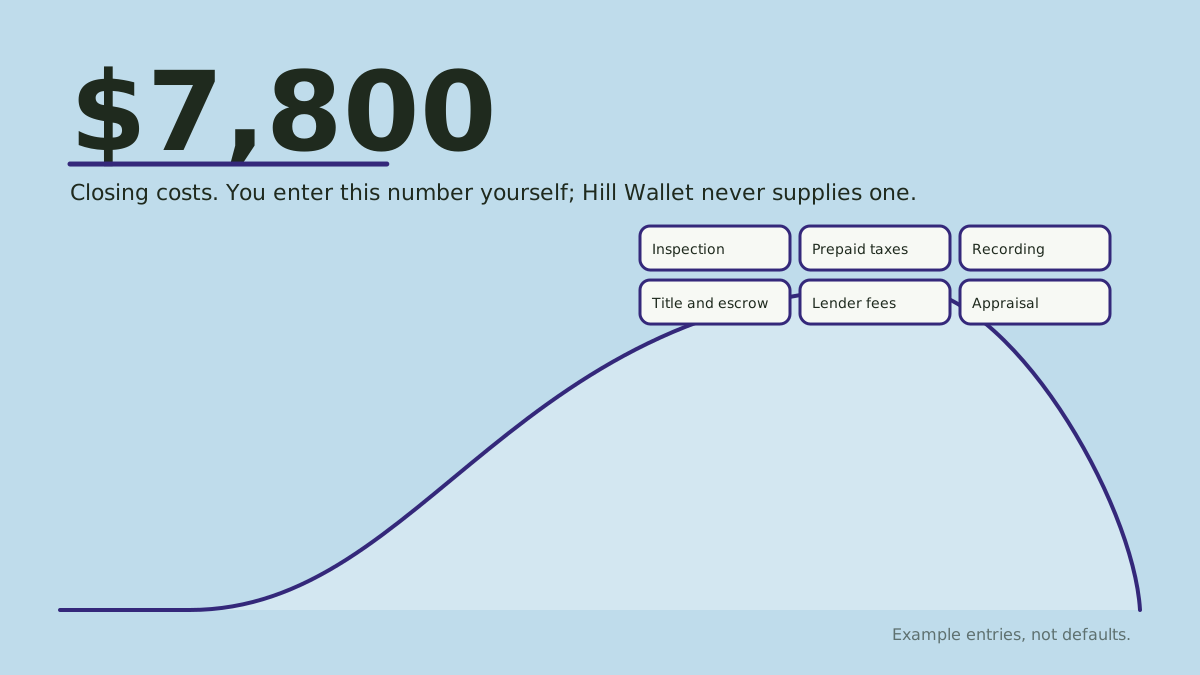
Closing costs are the bundle of fees and prepaid items that come due when the sale completes. They're commonly quoted as a small percentage of the home price, and the exact bundle varies, but the recurring members are these.
Fees for the people who process the sale. Someone prepares the paperwork, someone searches the title, someone records the deed. Each of them charges.
Prepaid items. Property taxes for a stretch of the year, and a first stretch of home insurance, are often collected up front so the account that pays them starts with something in it.
The inspection and the appraisal. Often paid before closing rather than at it, which is worth knowing, because it means money leaves before you're sure the sale will happen.
Small state and local items. Transfer taxes in some places, recording fees nearly everywhere, and a few line items with names you'll only see once.
The timing matters as much as the amount. Closing costs are due at signing, in full, usually as a single transfer a day or two before the keys change hands, and some of the smaller items (the inspection, the appraisal, a deposit that shows you're serious) come due weeks earlier. That means the money has to be sitting somewhere you can reach it, not tied up, not in the cushion, and not still being saved. A plan that reaches the down payment on the day of closing and needs another two months for the closing costs has arrived late. Put the closing figure into the summit from the start so that when the down payment is there, everything else is there with it.
Ask early for an itemised estimate from whoever is handling your side of the sale, then replace the percentage in your plan with the real figure. Until then, a percentage is an honest placeholder. The example climb on this site uses 3 percent of a $260,000 home, $7,800, as something the example member typed in, and it's there to be overwritten.
What does the move itself cost?
The truck, obviously, and it's rarely the expensive part. Around the truck sit a dozen smaller charges.
Deposits for utilities, sometimes several. A week or a month of overlap, where you're paying for the rental you're leaving and the home you've bought at the same time. Boxes, tape, and the pizza you owe the friends who carried the couch. The changed locks, because the previous owner had more keys than they handed over. A first grocery run into a kitchen with nothing in it, not even salt.
Write these down as a list, then total them. If you're moving across town with friends and a borrowed van, it might be a few hundred dollars. If you're crossing a state with a family, it won't be. The example member wrote $2,200. Yours is yours.