Two people saving for one home is either the easiest version of this or the hardest, and the difference has less to do with income than with whether the two of you ever chose, out loud, how it would work. Most couples don't. They open an account with a hopeful name, each puts money in when they can, and the first real disagreement arrives eighteen months later as “I've been putting in more than you.”
Here are the choices, with the tradeoffs named, so you can make them on purpose.
One pot or two?
One pot means a single account that both of you feed and both can see. The upside is obvious: one number, one history, no reconciling. The downside is that it removes any sense of what each person contributed, which is fine for some couples and quietly corrosive for others, particularly when incomes differ.
Two pots means each of you saves in your own account toward the same summit. Each person owns their pace and their record, and there's a natural privacy to it. The cost is that the shared picture only exists if someone adds the two up, regularly, and tells the other. Two pots with no shared view is how you end up three months from a target with no idea whether you've reached it.
There's a middle path, and it's the one most couples drift toward: money stays where each person keeps it, but there's one shared record where every deposit from either person gets logged. The record is the pot. Where the cash sits is a detail.
Equal split or proportional?
Equal means you each put in the same amount. It's simple, it feels fair in the sense of identical, and it works when incomes are close. When they're not, equal means the lower earner is giving up a much larger share of their month than the higher earner, and that imbalance is felt even when it's never said.
Proportional means each person contributes the same share of their income. If one of you brings in 60 percent of the household's money, that person puts in 60 percent of the monthly amount. It's fairer in the sense of effort, and it requires one slightly awkward conversation about exactly what each of you earns.
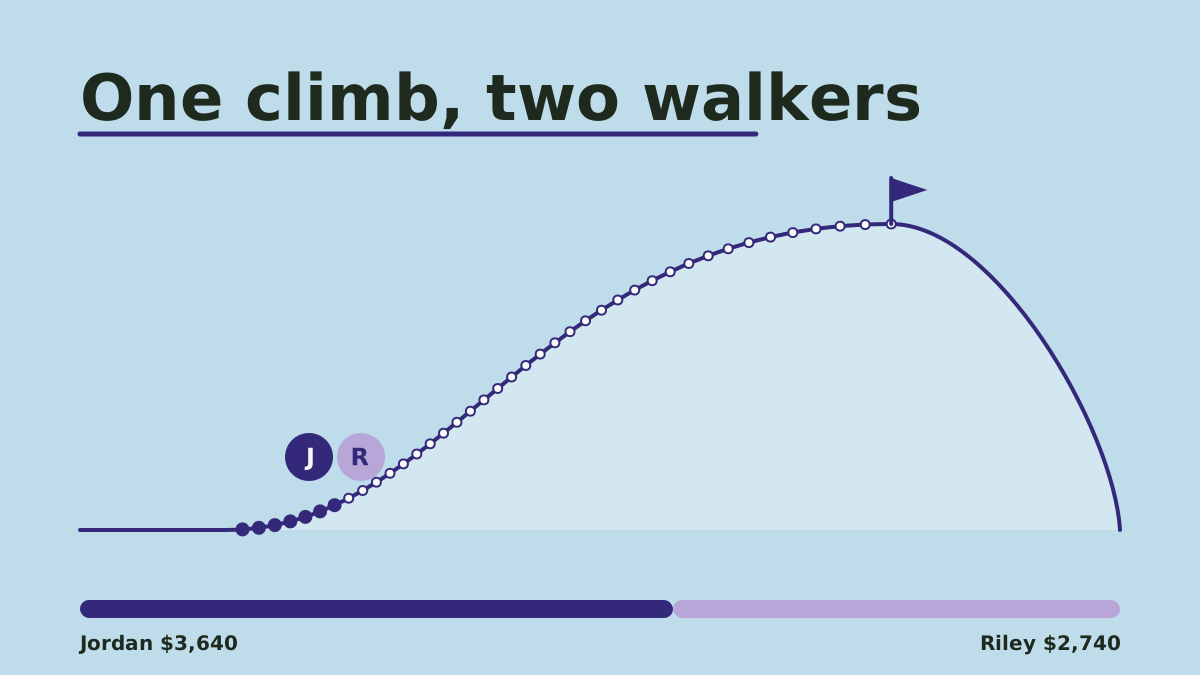
On the example climb, Jordan and Riley have logged $3,640 and $2,740 toward a $36,000 summit, and this month it was $500 and $350. That's not equal. It's around 57 and 43 percent, which might be proportional to their incomes or might just be what each of them could manage. The point is that both numbers are visible to both people, so whatever the split is, it isn't a secret.